

This is branded content for Queensland Government – Department of Primary Industries
Running a grazing property requires a careful balance of managing land, livestock, and the unpredictable forces of nature.
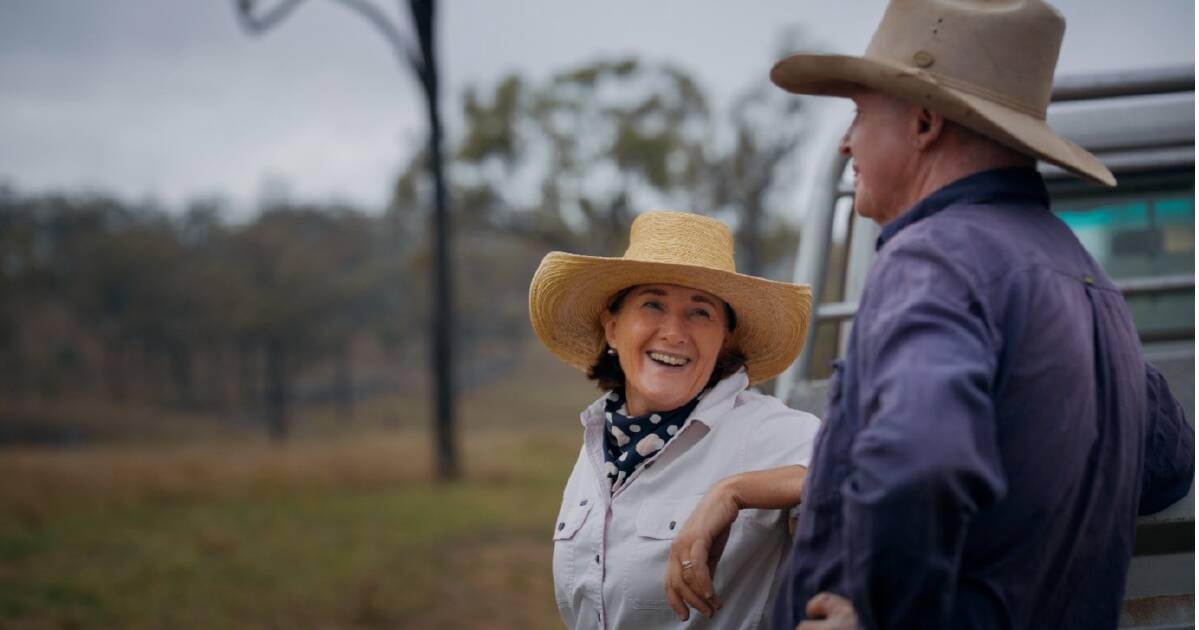
For Megan and Terry Dunne, who operate Shawlands, a 3,800-hectare commercial breeding and backgrounding property in the Biloela district of Central Queensland, this balance has been the cornerstone of their success.
Together with their children, they’ve turned their property into a model of resilience and sustainability, proving that with the right planning and support, producers can thrive even in the face of challenges like drought.
The Dunnes’ journey to resilience began with their participation in the Farm Business Resilience (FBR) Program, a joint Australian and Queensland Government initiative aimed at helping primary producers to build stronger, more profitable, climate-resilient businesses through workshops, personalised support and peer learning.
Their participation in the free program allowed them to mitigate climate variability risk by improving carrying capacity and land utilisation.

Mr and Mrs Dunne developed a Farm Business Resilience Plan, a comprehensive roadmap tailored to their property’s unique needs.
While the process required significant thought and effort, Mrs Dunne explained that the plan has become an invaluable tool.
“Our business plan is still utilised during planning meetings,” she said, highlighting its ongoing relevance in their decision-making.
One of the first major steps in their journey was the transformation of a 1,300-hectare paddock into five smaller paddocks.
This change, combined with improved water reticulation, allowed the Dunnes to introduce a second rotational breeder mob of about 130 head which boosted their carrying capacity by 10 per cent. The benefits didn’t stop there.
The improved rotational grazing system enhanced the quality and quantity of pasture, enabling their 400-head breeder herd to maintain high reproductive rates.
“The expansion of our rotation system to encompass the entire 400 head breeder herd will also ensure a swift post-drought recovery, with the retention of the nucleus breeder herd during dry times and the pastures re-generating quickly when the rains finally arrive,” Mrs Dunne said.

To bring their vision to life, Mr and Mrs Dunne successfully applied for two Drought Preparedness Grants through the Queensland Rural and Industry Development Authority (QRIDA).
These grants funded critical infrastructure projects, including fencing, water troughs, storage tanks, and a hay shed. The hay shed has greatly benefitted their operation, providing storage for up to 520 round bales and dry licks. This allows the Dunnes to stockpile hay during times when it is cheaper and more plentiful, ensuring they’re well-prepared for future dry spells.
The planning and implementation of these projects were a collaborative effort, involving the Dunnes, the Queensland Government, Rural Solutions Queensland, and QRIDA.
Reflecting on the experience, Mrs Dunne shared, “The process of planning and implementing these improvements has given us confidence that our grazing systems and associated infrastructure suit our business model, and we feel more prepared to handle future droughts.”
The Dunnes’ story is a testament to the power of forward-thinking and collaboration in agriculture. With determination, planning, and the right support, they have shown that it is possible to overcome challenges and build a resilient, thriving farming enterprise.
For details about the Farm Business Resilience Program visit dpi.qld.gov.au/drought-assist.
Watch Megan and Terry Dunne’s story HERE
The Farm Business Resilience Program is jointly funded through the Australian Government’s Future Drought Fund and the Queensland Government’s Drought and Climate Adaptation Program.
This is branded content for Queensland Government – Department of Primary Industries









Leave a comment