
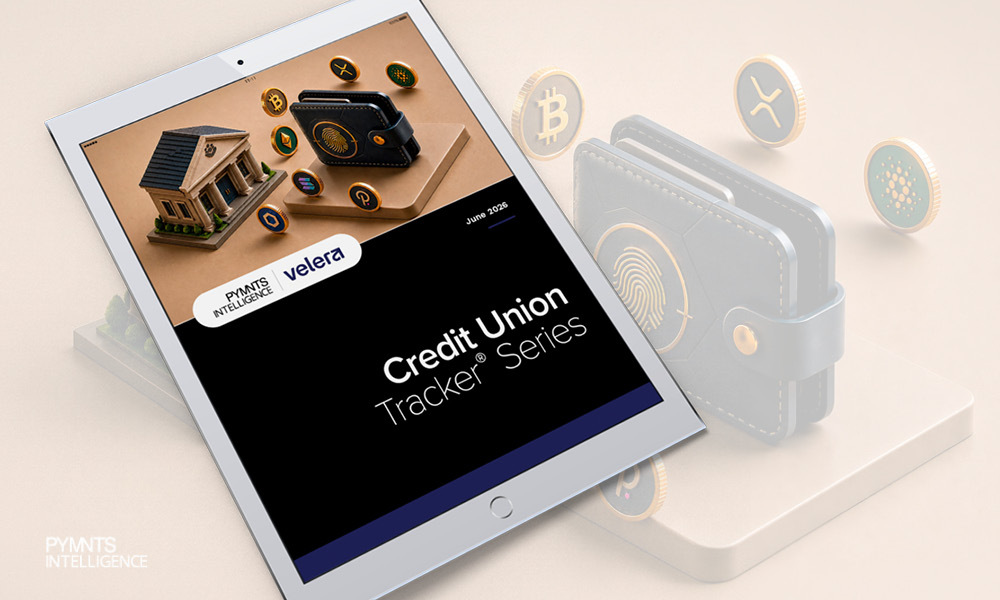
Digital currency may still occupy the edge of mainstream finance, but for younger consumers, it is no longer unfamiliar territory. Millennials and Generation Z increasingly view cryptocurrency and stablecoin access as part of a broader digital financial experience, even as most credit unions (CUs) remain largely absent from that conversation. PYMNTS Intelligence research finds that two-thirds of CU members are unsure whether their institution supports cryptocurrency, while younger members are already actively seeking answers elsewhere.
This Tracker examines why the digital currency gap has become a member-retention issue for CUs, why consumers still struggle to distinguish between crypto and stablecoin use cases, and how digital wallet infrastructure may offer a practical middle path forward.
Younger Members Are Already Looking for Digital Currency
The problem is not simply the lack of crypto offerings; it is that younger consumers increasingly evaluate financial institutions based on whether digital currency access exists at all.
Member expectations around digital assets are changing—chiefly along generational lines.
As the digital economy expands, interest in digital assets such as cryptocurrency and stablecoins is growing—but so is evidence of a CU member awareness gap. According to recent PYMNTS Intelligence research, just 7% of members say their CUs currently support crypto transactions, while fully two-thirds (67%) say they are unsure whether those capabilities exist at all. Stablecoin awareness is even more limited, with 70% of members uncertain whether their CUs support stablecoin services.
54%
of millennials express at least moderate interest in digital currencies.
At first glance, this uncertainty might appear to reflect a lack of communication as well as options. The reality is subtler. In fact, it reflects a widening generational divide in member priorities. Among baby boomer and senior members, for example, awareness of their CUs’ crypto offerings drops even further, to around 2%. However, among millennials and Gen Z, 27% report knowing their institutions offer crypto services—nearly four times the average awareness level. One conclusion is certain: The consumers who know whether their FIs support digital assets are the ones who went in search of them.
Millennials and Gen Z expect digital asset access as part of modern banking.
Younger members increasingly expect some form of digital asset access as part of a modern banking relationship. PYMNTS Intelligence data shows that more than half (54%) of millennials report at least moderate interest in digital currencies, while interest dips sharply among older generations.
The results are not surprising: Younger generations grew up in an environment shaped by app-based investing, digital payments and always-on financial access. As a result, digital assets often feel like a natural part of the broader financial ecosystem rather than a separate or experimental category. Even when consumers are not actively using crypto today, many still expect their institutions to understand and support emerging financial tools.
When CUs cannot meet that demand, younger members already know where else to go.
Consumers interested in crypto have grown accustomed to seeking it outside their FIs, turning to platforms such as Coinbase, Robinhood and Cash App instead. That behavioral shift creates long-term relevance risk for CUs. Once younger members begin using external platforms for investing, payments or digital asset experimentation, those relationships can gradually expand into broader financial activity.
For CUs, the stakes are real: Younger generations represent the future growth engine for the industry, and they are evaluating institutions against a digital standard that most CUs have not yet met. Research from Velera’s CU Growth Outlook study projects Gen Z spending to reach $12.6 trillion globally by 2030, accounting for nearly one-fifth of worldwide consumer spending. At the same time, younger consumers tend to be highly selective about the institutions they trust. They build financial relationships around convenience, personalization and digital relevance rather than long-standing loyalty. That dynamic, however, represents an opening for CUs: Even consumers interested in digital currency still prefer experiences that feel familiar, intuitive and frictionless.
Consumers Still Want Familiar Experiences
Interest in digital currency is growing, but consumer understanding remains uneven, creating both opportunity and caution for CUs.
For younger consumers, crypto has become a gateway to a broader asset ecosystem.
Crypto
is often framed for investments and stablecoin for payments, but neither drives choice of a financial institution.
Cryptocurrency, for many millennials and Gen Z consumers, represents participation in a financial ecosystem that extends beyond traditional banking—one that includes investing, digital payments and emerging forms of value exchange.
Millennials remain the most engaged demographic, with three in 10 expressing strong interest in using cryptocurrency for payments, while Gen Z reports strong interest at 24%. Younger consumers are not necessarily looking to use crypto for everyday purchases but view digital assets primarily as investment opportunities or financial tools that should be accessible through the same channels as other financial services.
For credit unions, that expectation of access is not yet being met, and the numbers bear it out: Only 7% of CU members express strong interest in crypto payments, compared to 19% of non-members, a gap that suggests CUs have yet to establish themselves as a destination for members interested in digital assets.
Most consumers still do not clearly distinguish crypto from stablecoin.
To industry practitioners, the distinction is fundamental: Cryptocurrency is volatile and investment-driven, while stablecoins are tied to fiat currencies such as the U.S. dollar and built for everyday transactions. For most consumers, however, that difference barely registers. Among millennials, 28% express strong interest in stablecoin payments versus 31% for crypto. Baby boomers and seniors report little or no interest in both at nearly identical rates—92% for crypto, 94% for stablecoins. The consistency across every demographic suggests consumers are treating both as variations of the same thing. The reason, the research indicates, is that stablecoin lacks the cultural familiarity that crypto has built over the years. As a result, consumers fold stablecoins into existing assumptions about crypto, including the very volatility they are designed to avoid.
For CUs, the limited mainstream knowledge of these products creates both opportunity and risk. On one hand, consumer behavior around digital assets is still forming, leaving room for institutions to shape how members engage with these tools. On the other hand, unclear consumer understanding makes it difficult to predict which use cases will ultimately gain lasting traction.
CUs face pressure to engage with digital currency without overextending into speculative products.
CUs must balance genuine member curiosity with real operational concerns. Moving too aggressively into volatile or speculative products could introduce regulatory, compliance and reputational risks that many institutions are not prepared to manage. At the same time, absence carries its own costs: Younger members interpret the lack of digital asset capabilities as a signal that an institution is falling behind broader financial innovation trends.
This tension creates a strong case for measured engagement rather than an all-or-nothing approach. What the data consistently shows is that consumers respond to familiar, trusted interfaces, not new and unfamiliar financial products. The emerging opportunity for CUs, therefore, centers less on full-scale crypto platforms and more on digital infrastructure that already feels familiar to members. That is where digital wallets enter the conversation.
Digital Wallets Could Be a Lower-Risk On-Ramp to Digital Currency
Digital wallets may solve the engagement problem without forcing credit unions to become crypto-native institutions.
The ‘wallet effect’ suggests consumers trust familiar interfaces more than standalone crypto products.
New research shows that consumer interest in digital currency rises when access is framed through a familiar digital wallet experience rather than through standalone crypto products. PYMNTS Intelligence describes this phenomenon as the “wallet effect”: When digital currency is accessible through the same tool members already use to pay, transfer and manage money, rather than as something they must seek out separately, interest climbs measurably. Among millennials, strong interest in cryptocurrency increases from 31% to 35% when accessed through a digital wallet. Bridge millennials show an even larger increase, climbing from roughly 25% to more than 30%.
35%
of millennials express strong interest in using cryptocurrency through a digital wallet.
The pattern is clear: Familiarity matters. Many consumers remain hesitant about digital assets themselves, but they are far more comfortable engaging through interfaces they already recognize and trust. Wallets reduce the perception that digital currency requires learning an entirely new financial system. This dynamic allows CUs to participate in digital asset innovation without forcing members into unfamiliar or intimidating experiences.
Digital wallets may lower the perceived complexity of digital currency adoption.
The wallet effect is even more pronounced with stablecoins, where familiarity gaps are larger. Among CU members, strong interest in stablecoin climbs from 5% for direct payments to 12% when accessed through a digital wallet.
The difference likely reflects the role wallets play in simplifying consumer experiences. Cryptocurrency already benefits from years of public awareness and media coverage, even among consumers who do not actively use it. Stablecoins, by contrast, remain relatively unfamiliar. Presenting them through a known interface helps lower the barrier to engagement.
For CUs, consumers’ comfort with digital wallets creates an opportunity to introduce new capabilities incrementally rather than forcing members into entirely new behaviors.
For credit unions, partnership-driven wallet infrastructure may offer the most practical path forward.
CUs may not need to build full-scale digital currency platforms themselves. Instead, they may benefit more from investing in wallet infrastructure and strategic partnerships that provide flexibility while limiting operational complexity.
Velera’s Digital Asset Lab reflects that philosophy, offering credit unions a framework for education, infrastructure readiness and measured experimentation. The initiative helps CUs build the technical foundation and institutional knowledge they will need when consumer demand for digital assets accelerates.
This strategy allows institutions to modernize member experiences without assuming the burden of becoming crypto-native organizations. Wallet infrastructure supports future flexibility and smoother integration with emerging financial technology, positioning institutions to adapt as the digital asset landscape evolves.
Build Digital Relevance Before Members Seek It Elsewhere
Digital currency adoption may still be evolving, but younger consumers are already forming expectations about how financial institutions should support modern payment and asset experiences. For CUs, the challenge is not necessarily becoming crypto platforms overnight. It is ensuring that members no longer have to leave the credit union ecosystem simply to explore digital financial tools.
PYMNTS Intelligence research suggests that digital wallets may provide the most practical bridge between member demand and institutional caution. Familiar interfaces increase consumer comfort with both cryptocurrency and stablecoin offerings while reducing the friction associated with entirely new financial products.
PYMNTS Intelligence recommends that CUs consider the following steps as they evaluate digital currency strategy:
- Prioritize digital wallet infrastructure that supports future flexibility.
- Evaluate FinTech partnerships that reduce operational and compliance burdens.
- Focus digital currency efforts on member experience and retention rather than speculation.
- Monitor evolving consumer demand for stablecoin payment use cases.
- Develop clear member education around digital asset capabilities and risks.
Credit unions do not need to become crypto exchanges to remain relevant in a digital-first financial landscape. But they do need to ensure that younger members see their institutions as capable of evolving alongside the way consumers increasingly store, move and think about money.

Digital assets are yet another signal of shifting consumer expectations. Credit unions don’t need to reinvent themselves as crypto exchanges to stay relevant, but they do need to demonstrate that they can evolve alongside the way younger members think about money. By making modern money experiences accessible, safe and grounded in trust, we not only close the access gap but also strengthen the long-term relevance and resilience of the credit union model for the next generation.”
Senior Innovation Strategist, Velera












Leave a comment