
Cathy Benhold, a writer for The New York Times, says her grandmother only uses cash for her needs and would have been in harmony with Satoshi Nakamoto, the legendary inventor of Bitcoin, whose true identity remains a mystery. She noted that “Nakamoto” is a pseudonym, but who was he really? Many have attempted to uncover his identity, including her colleague John Carrero, an investigative journalist who claims to have identified the true creator of Bitcoin, an identity that has spawned others.
The concept of digital currency was first introduced in a research paper published in an obscure corner of the Internet in 2008. Its author, identifying himself as Satoshi Nakamoto, described his idea for a decentralized electronic currency that would allow people to send money globally without fees and without the need for banks or government oversight. Since then, public fascination with uncovering the identity of Bitcoin’s creator has continued to grow.
After a short time, doubts began to emerge about the authenticity of the name. As Bitcoin’s use expanded, John Carrero became increasingly interested in solving the mystery. He spent 12 years working on the case, arriving at a near-truth. Bitcoin is used for legitimate purposes, such as providing a reliable store of value for people in countries with unstable currencies. However, due to the lack of oversight, it has also been used for illicit activities, including money laundering.
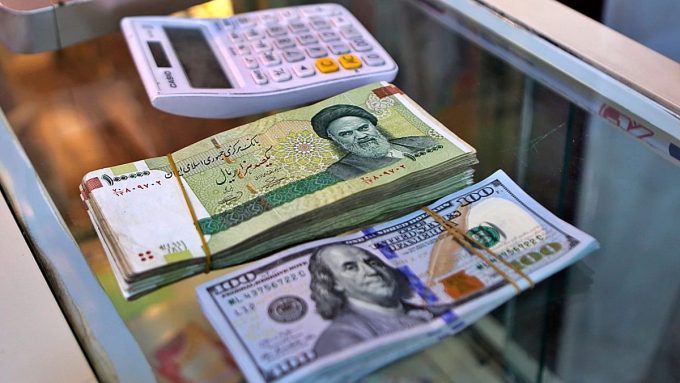
Some countries, including Iran, use Bitcoin to help circumvent sanctions. Because governments do not control the currency, and out of concern over potential legal repercussions from countries such as the United States, Bitcoin’s creator chose to remain anonymous. He did not want people to perceive Bitcoin as a typical company with a product and a CEO. Instead, he wanted it to be seen as a new kind of discovery, like digital gold, a newly created digital commodity. The absence of a known human founder reinforces this idea.
Over time, suspicion fell on the influential British computer scientist Adam Back. However, no one has been able to substantiate these claims. When John Carrero analyzed Adam Back’s writing and compared it to Nakamoto’s, he noted several similarities, including what he believed was a consistent misuse of commas and periods, placing them incorrectly between words or omitting them where grammatical rules would require them. He even considered using artificial intelligence to replicate this writing style.
Back still denies it, but I am 95.5 percent certain it is the same person. I believe his denial is disingenuous, driven by a desire to maintain secrecy. I must say that the Bitcoin community has taken on a near-cult-like dimension. They regard Satoshi Nakamoto as an inspirational figure and do not want to link him to any specific name or image. They want to continue viewing it as a non-hierarchical, decentralized, collective project – a cryptocurrency not controlled by any single entity. One of their favorite slogans is “We are all Satoshi.”
Adam Back was a member of a privacy- focused, anarchist group in the 1990s that sought ways to break free from government control and censorship. They wanted a currency beyond government control, fearing that the increasing digitization of financial transactions would lead to every transaction being recorded electronically, and that governments would use these records to track individuals. They hence pursued the creation of what they described as “electronic money,” a digital form of cash that cannot be traced.
Carrero believes that Satoshi or Back mined 1.1 million bitcoins in the first 16 months of the project. He believes that, at today’s prices, they possess a fortune estimated at around $82 billion. Carrero said he met Back several times, and that he is the opposite of the stereotypical cryptocurrency man. He is quiet, introverted, has shaggy gray hair, and seems like a computer scientist, and is a pleasant conversationalist. He had publications in the 1990s about the necessity of working under a pseudonym to avoid government suspicion. This seems to be someone who had been planning this for a long time.










Leave a comment