What Is a Sukuk?
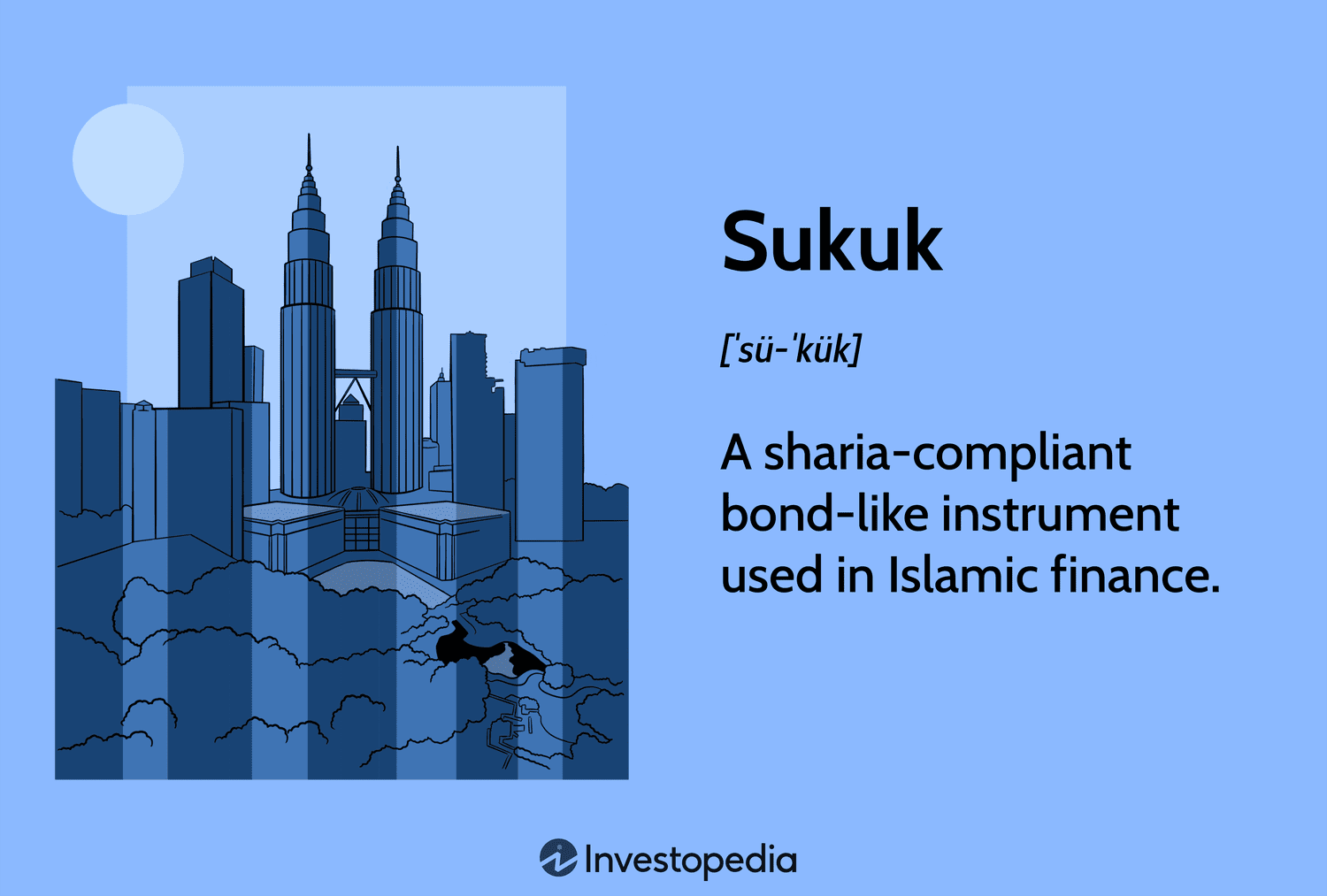
Sukuk are Islamic financial certificates that mirror bonds in Western finance but adhere to Sharia principles. Unlike traditional interest-bearing bonds, sukuk involve selling certificates to investors, who then gain partial ownership in an asset purchased with those funds.
The issuer commits to buying back these certificates at a predetermined future date and at face value. This Sharia-compliant structure allows for debt financing without interest, linking investor returns directly to the performance of a tangible asset.
Key Takeaways
- Sukuk are Sharia-compliant financial instruments similar to bonds but differ by providing ownership of an asset instead of a debt obligation.
- These instruments have grown in popularity since their inception, primarily benefiting from the prohibition of interest (riba) under Islamic law, which makes traditional Western bonds non-viable for Islamic investors.
- Sukuk holders earn returns based on the profits generated by the underlying asset, unlike traditional bondholders who receive fixed interest payments.
- The most common form of sukuk is structured as trust certificates, involving an offshore special purpose vehicle to facilitate the investment.
- Sukuk’s value is linked to the performance of the backing assets, offering potential appreciation if the asset’s value increases, contrasting with bonds whose returns are dependent on interest rates.
Get personalized, AI-powered answers built on 27+ years of trusted expertise.
The Growth and Mechanics of Sukuk
Since 2000, when the first sukuk were issued in Malaysia, these Sharia-compliant financial instruments have become very popular. Bahrain issued its first sukuk in 2001. Today, both Islamic corporations and state-run organizations worldwide use sukuk, which occupy a growing share of the global fixed-income market.
Islamic law prohibits what’s known as “riba,” or what we understand as “interest” in the West. Therefore, traditional, Western debt instruments cannot be used as viable investment vehicles or ways to raise capital for a business. To circumvent this, sukuk were created in order to link the returns and cash flows of debt financing to a specific asset being purchased, effectively distributing the benefits of that asset. This structure allows investors to comply with Sharia while still benefiting from debt financing. However, because of sukuk’s structure, financing can only be raised for tangible assets.
Thus, sukuk represent aggregate and undivided shares of ownership in a tangible asset as it relates to a specific project or a specific investment activity. An investor in a sukuk, therefore, does not own a debt obligation owed by the bond issuer, but instead owns a piece of the asset that’s linked to the investment. This means sukuk holders receive income from the asset, unlike bondholders who get interest payments.
Comparing Sukuk and Traditional Bonds
Sukuk and traditional bonds share some similarities but also have key differences:
Similarities
-
Both provide investors with payment streams.
-
Bonds and sukuk are issued to investors and may be used to raise capital for a firm.
-
Both are considered to be safer investments than equities.
-
Sukuk investors receive profit generated by the underlying asset on a periodic basis while bond investors receive periodic interest payments.
Key Differences
-
Sukuk involves asset ownership while bonds are debt obligations.
-
If the asset backing a sukuk appreciates then the sukuk can appreciate whereas bond yield is strictly due to its interest rate.
-
Assets that back sukuk are halal whereas bonds are often riba and may finance non sharia compliant businesses or fuel speculation.
-
Sukuk valuation is based on the value of the assets backing them while a bond’s price is largely determined by its credit rating.
Example of Sukuk Structures: Trust Certificates
The most common type of a sukuk comes in the form of a trust certificate. These certificates are also governed by Western law, however, the structure of this type of sukuk is more nuanced. The organization raising funds first creates an offshore special purpose vehicle (SPV). The SPV then issues trust certificates to qualified investors and puts the proceeds of the investments toward a funding agreement with the issuing organization. In return, the investors earn a portion of the profits linked to the asset.
Trust certificate sukuk are only viable if an SPV is set up in an offshore location that permits such trusts. This is sometimes not possible. If an SPV and trust certificates can’t be created, a sukuk can be structured as an alternative civil-law structure. In this scenario, an asset-leasing company is created in the country of origin, effectively purchasing the asset and leasing it back to the organization in need of financing.










Leave a comment