
Iran’s currency on Monday dropped to a record low
of more than two million
to the US dollar on the open market, according to websites that track the
currency’s movement.
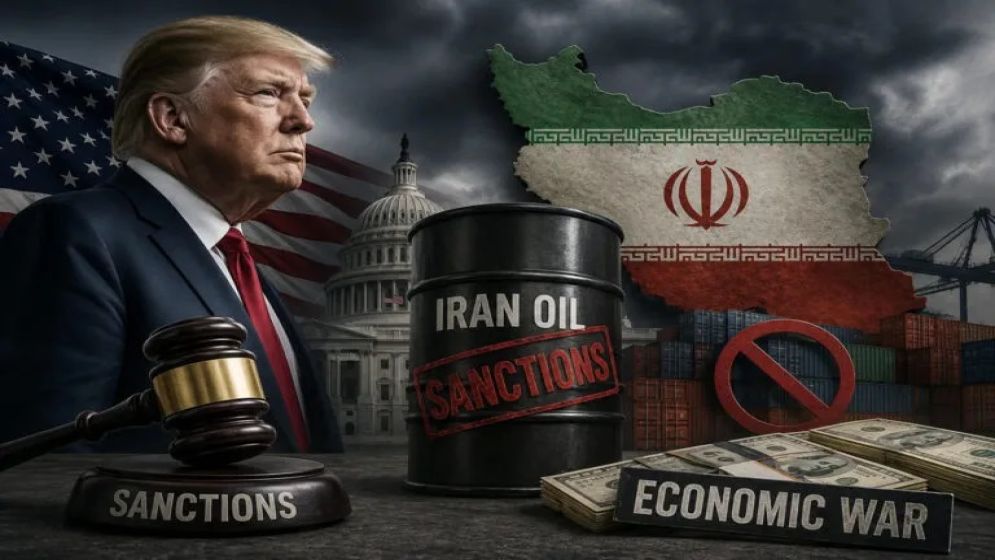
The decline in the rial currency comes as the US Treasury
plans a new raft of sanctions against Iran, which it dubs would be the worst
ever in history, and amid a worsening economic crisis in Iran.
The International Monetary Fund expects the Iranian economy
to contract by more than 5% this year, while inflation for food exceeds 100%
and unemployment rises.
Yet, despite the impact of US sanctions on paper, Iran has so far
been numb to
economic pain.
US Treasury Secretary Scott Bessent warned in an op-ed
Sunday that an “economic D-Day is coming for Iran” and threatened countries
that do business with Tehran.
“At dawn begins an economic D-Day — the single greatest
financial offensive ever marshalled against an adversary,” he wrote in a
Financial Times op-ed.
“The world should understand that our objective is to sever
every economic lifeline that sustains the tyrannical regime until Tehran stands
alone,” he said.
Bessent will hold a news conference later today on expected
US sanctions on Iran.
The Trump administration’s threat could put China, India and
even Germany in the firing line.
Iran exported to 147 countries in 2022, according to the
most recent data from the World Bank. It imported goods from 114 countries that
year.
China is by far Iran’s biggest trading partner, accounting
for the bulk of Iran’s oil and non-oil exports. Iranian exports to China
amounted to $22.4 billion in 2022, according to the World Bank. Imports from
China stood at $15.6 billion.
Other Asian countries, Iraq and the United Arab Emirates are
also significant export destinations for Iran. The country’s imports come
mostly from the United Arab Emirates, China, Turkey, India and Germany, a 2024
World Bank report shows.
Last year, Germany exported goods worth €962 million ($1.1
billion) to Iran and imported goods worth €235 million ($275 million), according
to the country’s statistics office. Imports increased marginally on the prior
year, but both exports and imports have plummeted by around half or more since
2018, when the United States reinstated extensive sanctions on Iran.
Bilateral trade between India and Iran amounted to $1.1
billion between April and December 2025, according to India’s commerce
ministry. Major Indian exports to Iran include basmati rice, tea, sugar, fresh
fruits and pharmaceutical drugs.
The free market rate of is different from the official rate,
which values the rial 29% higher against the US dollar.
The governor of Iran’s Central Bank sought to reassure
businesses Monday that it has sufficient foreign currency to facilitate trade.
Abdolnaser Hemmati told the Entrepreneurs’ Association the
bank would provide $20 billion in foreign currency for the industrial sector by
the end of the year.”
“We have no problem supplying foreign currency, and we can
provide entrepreneurs with as much foreign-currency cash as they require,”
Hemmati said, according to the semi-official news agency Fars.
“We guarantee that the foreign currency needed for essential
goods and medicines will be provided,” he said.
The rial’s devaluation will have the effect of
making imports more expensive and Iranian exports cheaper.











Leave a comment