

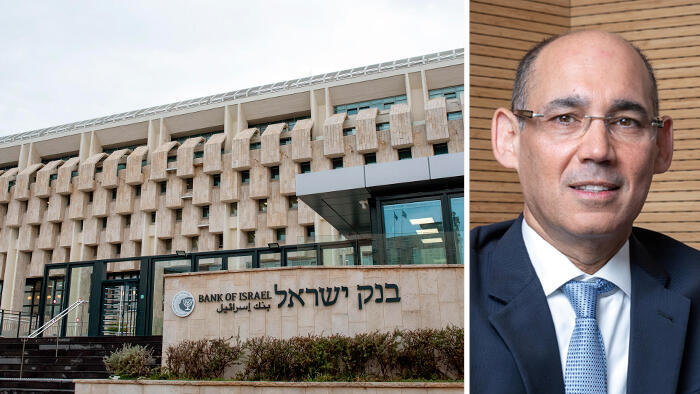
There are figures that should not pass unnoticed, and the Bank of Israel’s purchase of $801 million in foreign currency is one of them.
The foreign exchange reserves report published by the Bank of Israel each month is usually among its least exciting publications. Yet anyone who opened this month’s report saw that reserves had increased by approximately $2.7 billion. Buried within the report was a notable detail: the central bank had purchased $801 million in foreign currency.
That is hardly a marginal figure in an era of relatively stable exchange rates.
The Background: A Surging Shekel
The timing is important. The shekel has appreciated by more than 25% since April 2025 and, over the past month, has reportedly become the world’s strongest-performing currency against the dollar, according to research by UBS and investment house Meitav.
The rapid appreciation has intensified pressure from exporters, who have repeatedly urged the Bank of Israel to intervene in the foreign exchange market to curb the shekel’s strength. They argue that the appreciation is already contributing to layoffs and could deepen challenges facing Israeli industry, including the high-tech sector, a key driver of economic growth.
Finance Minister Bezalel Smotrich has also criticized the central bank for refraining from intervention.
At the same time, Bank of Israel Governor Amir Yaron and Deputy Governor Andrew Abir have consistently argued that sustained foreign exchange intervention is ineffective, attracts speculative activity, and is not the role of a central bank. Their position has been clear: the central bank does not seek to artificially determine the exchange rate and cannot do so effectively over the medium to long term.
In other words, the message was straightforward: there would be no intervention.
According to the Bank of Israel, the purchase was conducted on an “ad hoc basis” to ensure the continued orderly functioning of financial markets.
What exactly happened remains unclear.
The central bank has declined to provide additional details, emphasizing only that the action was taken to address an unusual market event rather than to influence exchange-rate policy. Officials have compared the intervention to a plumber clearing a blockage in a pipe: the goal was not to change the direction of the flow, but simply to restore normal functioning.
However, several questions remain.
First, $801 million is not a trivial amount. It is not a minor correction or routine market operation. The scale is comparable to monthly intervention programs the Bank of Israel conducted during previous periods of sharp currency appreciation.
Second, the central bank has historically communicated unusual interventions relatively quickly after they occurred. While announcing an intervention in advance is impossible, and real-time disclosure could undermine its effectiveness, the Bank of Israel has typically provided clarification shortly afterward.
This time, there was no announcement. No explanation. No indication that an extraordinary market event had occurred.
Instead, the information emerged weeks later in a routine reserves report.
This is where the communication problem begins.
When a central bank identifies a market distortion and acts to correct it, it typically provides at least some explanation. This time, the Bank of Israel offered little beyond a brief reference to an unspecified market disruption.
The lack of detail has inevitably fueled speculation.
Theories have ranged from a temporary liquidity shortage to a technical market malfunction. Others have suggested the bank may be reluctant to discuss intervention publicly amid broader international debates over currency policy and dollar weakness.
A well-known principle of central banking is that when policymakers do not explain their actions, others will explain them for them.
Manufacturers Association President Avraham (Novo) Novogrodsky welcomed the intervention, arguing that the central bank was finally responding to pressure from exporters.
“The pressure is starting to work, and that’s good,” he said. “I don’t care what the reason is, but it’s good that the Bank of Israel is getting involved.”
For many in the business sector, the distinction between a technical intervention and a policy intervention is largely irrelevant. The signal they see is that the Bank of Israel has entered the market after months of insisting it would not.
That interpretation is precisely the opposite of the message the central bank appears to be trying to convey.
The larger issue may be trust.
Market participants closely monitor not only what central banks do, but also what they say.
One senior foreign exchange trader at a major Israeli financial institution said he was surprised and disappointed by the revelation. He had defended the Bank of Israel’s public statements, arguing that repeated assurances from the governor and deputy governor meant the bank was not intervening in the market.
“If a central bank says one thing and the market later discovers something that looks different, that creates a problem,” he said.
For any central bank, credibility is one of its most valuable assets. Monetary policy operates not only through interest rates and market operations but also through expectations. Those expectations depend on consistent, transparent communication.
The issue is not necessarily the intervention itself. If the Bank of Israel identified a genuine market malfunction, intervening is entirely consistent with its responsibilities.
The problem is the gap between the action and the explanation.
Had the bank immediately clarified that it was responding to a one-time market disruption rather than changing its broader policy stance, it might have strengthened confidence while countering criticism that it was ignoring the shekel’s appreciation.
Instead, the absence of detail has created room for competing narratives.
Some analysts are already speculating that there may have been additional interventions during June. Others view the purchase as evidence that pressure from exporters and politicians is beginning to influence policy.
A Communication Challenge
The Bank of Israel finds itself in a delicate position.
Its independence is under constant scrutiny, and every comment regarding exchange-rate policy is closely examined by investors, exporters, politicians, and traders alike.
That makes communication especially important.
A professional market operation can quickly become politically charged if it is not adequately explained. In financial markets, perception can sometimes matter almost as much as reality.
The Bank of Israel responded: “Since the implementation of the current reporting framework, information regarding foreign exchange operations has been published in a centralized manner as part of the monthly reporting process, rather than through real-time disclosures.”











Leave a comment