

São Paulo – The United Arab Emirates’ Dubai Multi Commodities Center (DMCC), an exchange where various agricultural and mineral commodities are traded, announced earlier this month that it will create a business platform dedicated to cocoa trading. The Cacao Center, as the business hub is being called, is expected to be launched in phases. To ANBA, DMCC executive chairman and CEO Ahmed Bin Sulayem said the new space will offer producers, including Brazilians, opportunities to reach markets, capture value for their products, and gain better access to capital.
According to data presented by the executive, the commodity market was estimated at USD 16.6 billion in 2025 and is expected to grow to USD 26.2 billion by 2035. Production, in turn, is declining — due to climate pressures and pests, the 2023/2024 harvest was 13.3% smaller than the previous one, totaling 4.4 million metric tons.
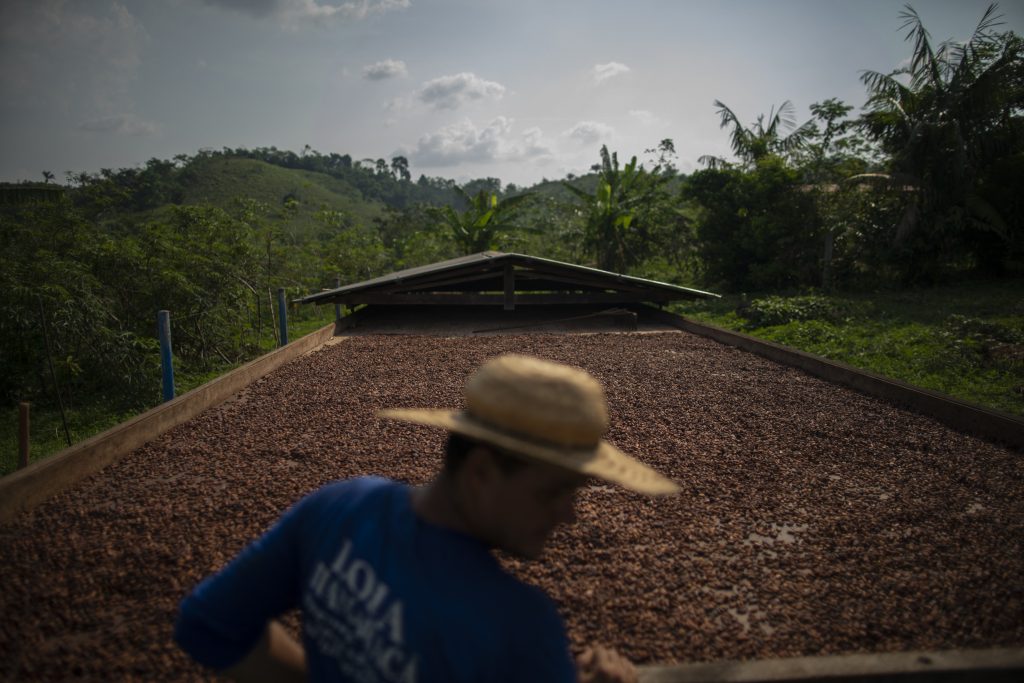
Another challenge highlighted by the executive is value creation along the supply chain. Most of the global supply, he said, comes from 5 million to 6 million smallholders, yet most of the product’s value is added in later stages. “Our objective is to build a platform that connects producers more directly with markets, capital and value-added services,” Sulayem said in a written interview.
DMCC’s proposal is to offer commodity trading in a compliant environment that meets the requirements of regulated international markets. “What that tells us is that cocoa is no longer simply an agricultural commodity. It is becoming a test case for how global trade adapts to volatility, regulation and changing consumer demand,” he said, noting that the sector has been adapting to mandatory sustainability and traceability standards.
Sulayem cites the DMCC’s existing coffee and tea centers as examples of the business model. These hubs provide grading, storage, blending, packaging, and access to financing—services that are expected to be replicated in the new initiative.
“The Cacao Center will build on that foundation while introducing new, dedicated capabilities. We are working with our partners Kumbi Cocoa and Ribezzi Group to evaluate and develop integrated infrastructure for storing, trading and processing cocoa beans into semi-finished products such as cocoa liquor, cocoa butter and cocoa powder. This is critical because value in this market is increasingly created at the processing stage, not simply through the export of raw beans,” he said.
Opportunity for Brazilian cocoa producers
Sulayem also commented on the opportunities the Cacao Center will offer Brazilian producers. He estimates that by 2030 Brazil could produce 400,000 metric tons of cocoa, making the country self-sufficient in the commodity. The next step, he said, would be to become a net exporter—exporting more than it imports. According to estimates by the International Cocoa Organization (ICCO), Brazil’s 2024/2025 crop totaled 210,000 tonnes. Pará and Bahia are the main producing states.
Although West Africa is the world’s largest cocoa producer, suppliers from Latin America are emerging as reliable alternative partners, the executive said. Ecuador expanded its output by 84% between 2014 and 2024 and is now the world’s second-largest cocoa producer, behind Côte d’Ivoire.
He said that for Brazilian participants, the DMCC Cacao Center offers three main opportunities: expanded market access, product value capture, and access to capital. Regarding Brazil, Sulayem also noted that the country’s planting method provides an advantage compared to other countries.
“Brazil also brings a differentiated proposition to this conversation: its Cabruca agroforestry system, where cocoa grows under native forest canopy, is a traceable, deforestation-free model that commands genuine premium positioning in international markets. For Brazilian producers focused on fine flavor, organic or certified sustainable cocoa, Dubai provides a direct route into fast-growing consumer markets across the Middle East and Asia,” he said.
Sulayem said the center will be rolled out in phases and that he is working with partners on the details of the next steps. Initially, the hub will leverage existing agricultural commodities infrastructure.
Read more:
Brazil expects record coffee harvest in 2026
Translated by Guilherme Miranda
WAM
©Mauro Pimentel/AFP







Leave a comment