

With only a few days left in June, one of the factors still weighing on the cryptocurrency market is the steady outflow of capital and the decline in demand activity. This dynamic has started to put more pressure on the crypto market, as investors continue to show a high perception of risk and appear to be moving toward more stable assets, such as the US dollar, in the short term.
The loss of appetite for cryptocurrencies has become a recurring theme and reflects a significant drop in market confidence. This environment could continue to pressure the sector over the next few weeks of trading, especially if alternative assets continue to show stronger performance and greater appeal than cryptocurrencies.

Demand strength fails to recover
There were not many major economic events during the trading week, although the release of the US Core PCE inflation data stood out. The indicator came in at 3.4%, in line with expectations and slightly above the previous 3.3% reading. Although the figure did not bring a major surprise, it still reflects the persistence of inflationary pressures in the United States, especially considering that this same indicator was near 3.00% in February.
Concerns over more persistent inflation continue to support the possibility of a more aggressive Federal Reserve. This is reflected in the probability table published by CME Group, which still shows a probability close to 47.7% that the Fed could raise its benchmark rate at the September 16 meeting, from the current 3.75% toward a potential 4.00% area. In other words, the market continues to price in the possibility of a more restrictive US central bank over the coming months.
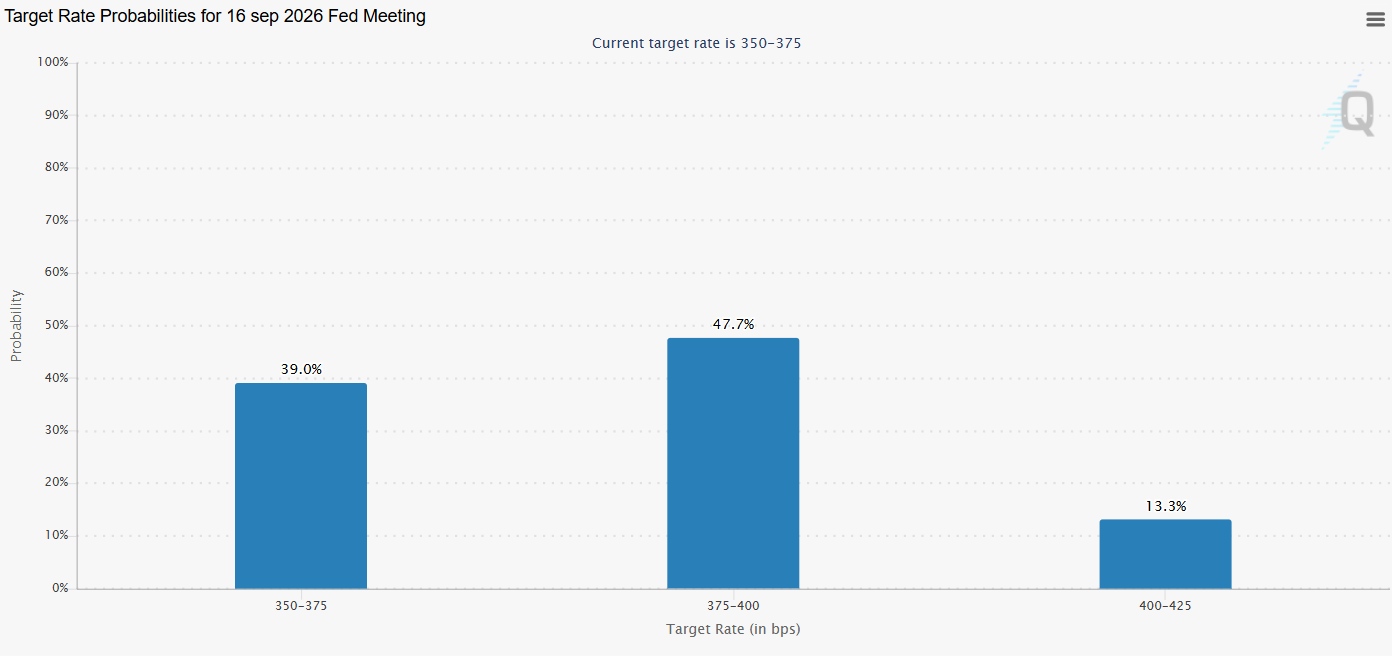
Source: CMEGROUP
This macroeconomic backdrop is not especially favorable for confidence in the cryptocurrency market in the short term. As seen in previous weeks, higher interest rates in the United States can create an environment where borrowing costs rise and available market liquidity starts to decline. This type of scenario can also increase concerns about a potential economic slowdown, which usually limits appetite for risk assets such as cryptocurrencies and favors a rotation toward more stable markets, including the US dollar.
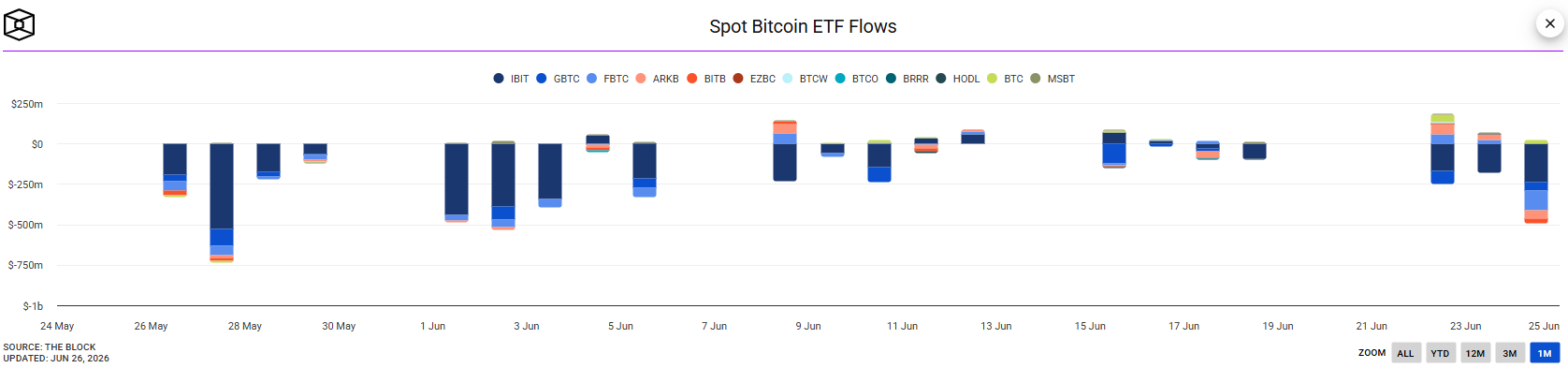
In fact, this lack of strength and the potential rotation toward other markets have become an important dynamic within the crypto market. This can be seen in the behavior of Bitcoin ETFs, which often serve as a key reference for measuring market demand appetite. Since the final days of May, the ETF market has recorded consistent net capital outflows. Even in the most recent week, the latest session recorded on June 24 showed an outflow close to 500 million dollars. This continues to reflect a clear loss of appetite and may be showing a relevant shift of capital away from Bitcoin and into other markets.
Source: Theblock
Taking all of this into account, the US macroeconomic environment and the possibility of a more aggressive Federal Reserve do not appear to be creating a favorable backdrop for cryptocurrencies in the short term. Weak demand reflects a rotation of capital that may be moving toward alternative markets. As long as expectations of more restrictive central banks remain in place, a recovery in crypto demand could stay limited, and the market could continue to show weakness over the next few sessions.
Bitcoin compared with other markets
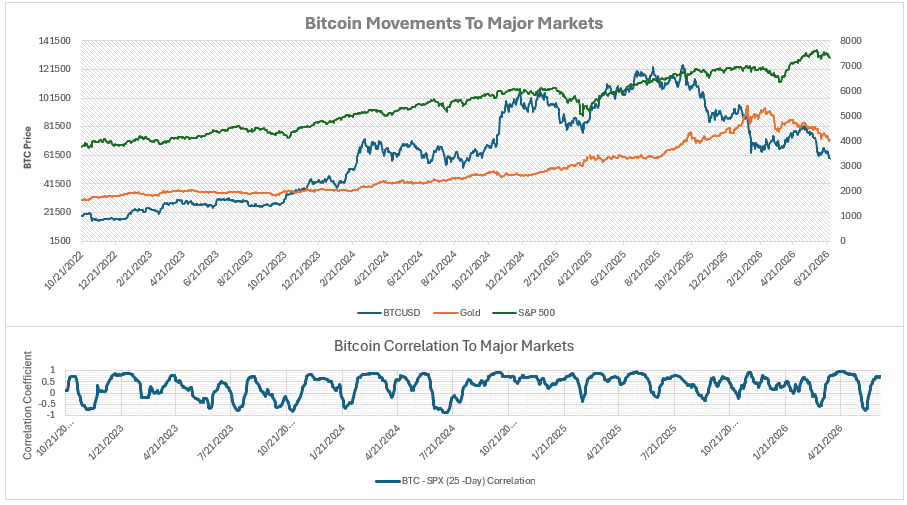
One of the short-term behaviors that has started to gain relevance is the increase in the positive correlation between the S&P 500 and Bitcoin price movements. Now, the coefficient is above 0.5, showing an important positive correlation between both markets over the last 25 sessions. However, it is important to remember that correlation coefficients can change over time.
Source: Data – TVC, StoneX, Tradingview
This relationship is relevant because the US equity market has also started to show consistent weakness in the short term, amid concerns around the AI sector and the performance of large technology companies. In this environment, Bitcoin no longer appears to be behaving completely as an isolated asset. Instead, at least in the short term, it is following a similar dynamic to other traditional risk assets, such as equity indices.
For that reason, as the market reduces exposure to risk assets, demand for cryptocurrencies may also be affected. This helps explain the positive relationship between weakness in the equity market and Bitcoin. It also shows that cryptocurrencies are not being seen, for now, as a clear alternative during periods of stock market weakness.
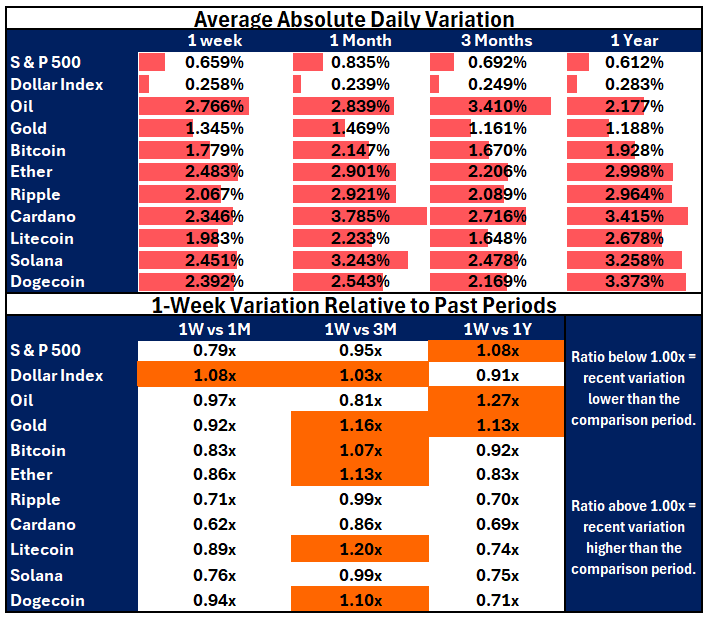
It is also important to look at the price variation dynamic within the crypto market. During the week, several cryptocurrencies showed an average daily price variation below the levels recorded over the last month and also below the average of the past year. This matters because it reflects not only weakness, but also lower activity in the market. In other words, investor interest seems to have declined, while other assets, such as the US dollar, are showing more consistent activity compared with previous periods.
Source: Data – TVC, StoneX, Tradingview
If the cryptocurrency market maintains an important relationship with traditional risk assets and continues to show low activity in the short term, its lack of appeal could keep weighing on demand. This could maintain relevant selling pressure across cryptocurrency price action over the next few sessions.
Confidence remains in sensitive territory
Looking at the cryptocurrency market’s Fear and Greed Index, the indicator has failed to show any meaningful improvement. Now, it remains near the 16-point area, once again close to “extreme fear.” This shows that confidence in the crypto market remains fragile and that, for now, there is no consistent recovery pointing to stronger short-term demand.
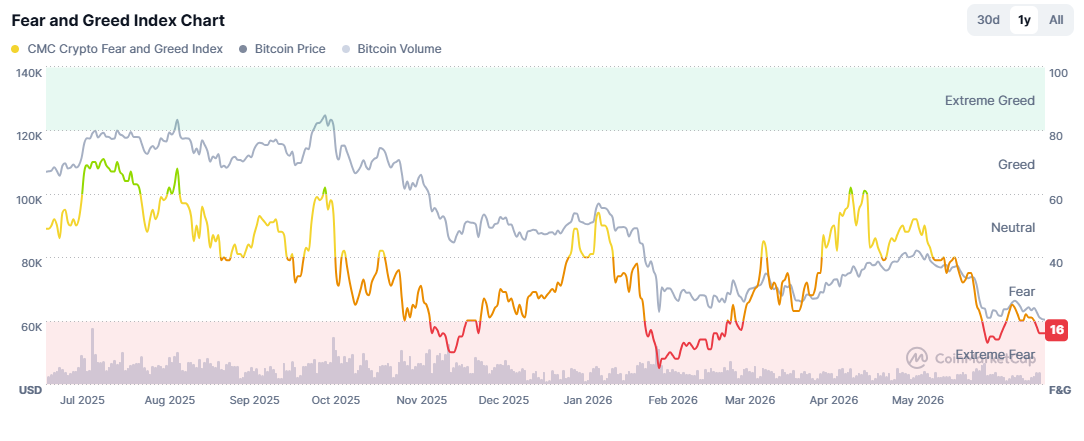
Source: Coinmarketcap
This behavior indicates that market participants remain highly cautious toward cryptocurrencies. If the index fails to advance consistently, it will be difficult to talk about a favorable environment for stronger demand in the short term. This could also continue to signal a phase of relevant weakness in the crypto market over the next few sessions.
Written by Julian Pineda, CFA, CMT – Market Analyst
Follow him on: @julianpineda25






Leave a comment