

At a time when the world’s most consequential conversations revolve around climate change, economic resilience, and the future of emerging economies, a new generation of African leaders is helping shape global solutions from the highest levels of international decision making.
Among them is Tolu Olusina, A data-driven climate finance professional, she uses evidence and analytics to bridge Africa’s sustainable development gap with global capital markets, turning complex financial and impact data into decisions that unlock economic opportunity across the continent.
Over the last decade, Olusina has built a career that spans humanitarian response, international development, climate finance, and youth empowerment. Her journey has taken her from conflict affected communities in Northern Nigeria to some of the world’s most influential institutions, including the International Finance Corporation, a member of the World Bank Group, and the Green Climate Fund, the world’s largest dedicated climate finance institution.
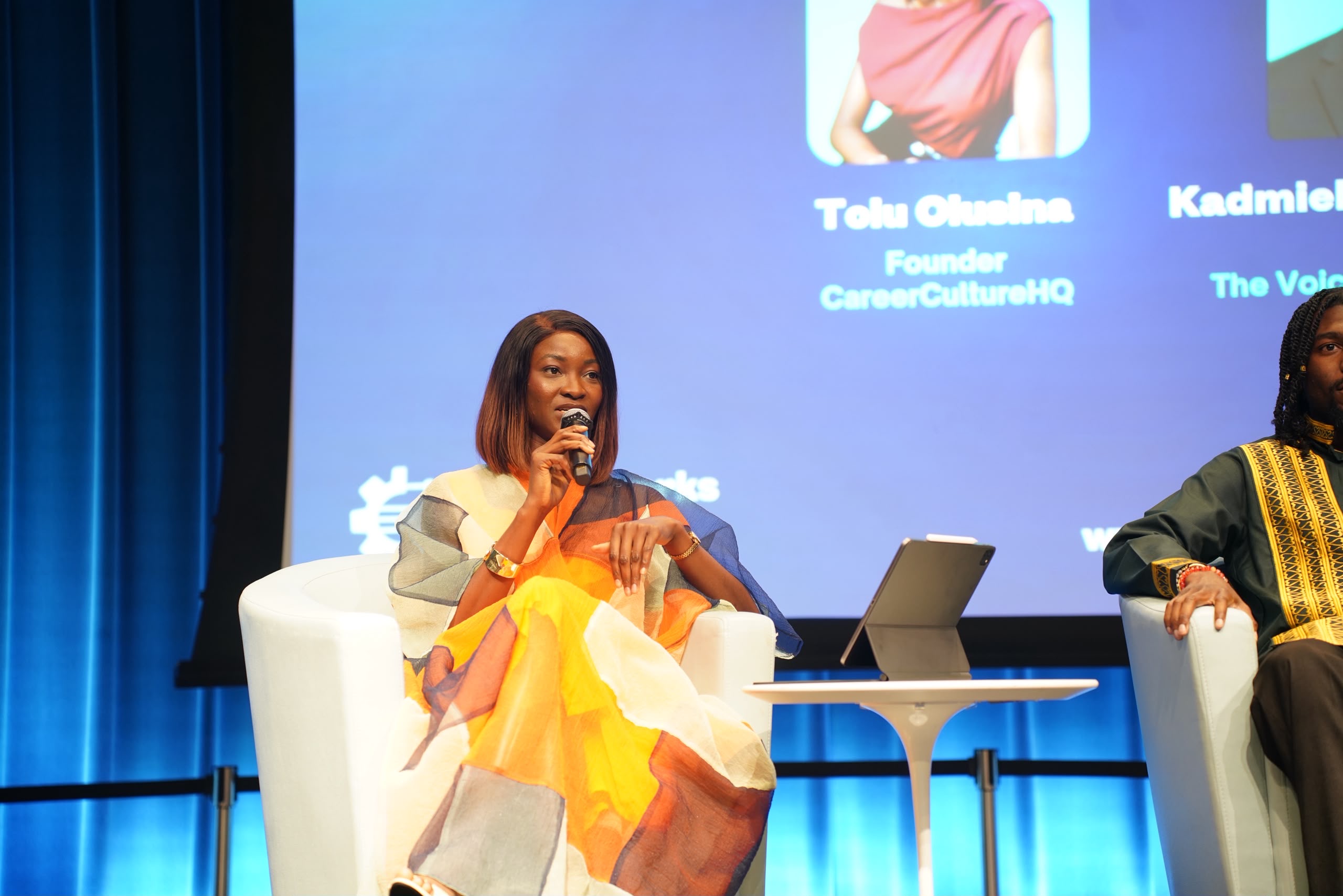
While many know her for her work in global development, those closest to her describe her as a leader driven by a singular belief: that access to opportunity should never be determined by geography, circumstance, or background.
That conviction has become the defining force behind both her professional achievements and her growing influence among young Africans seeking to build careers on the global stage.
“I thrive at the intersection of ambition, youth engagement, and climate finance,” Olusina says. “Storytelling is the thread that ties it all together.”
Her story begins far from the conference halls and boardrooms where many of today’s climate decisions are made.
Early in her career, Olusina worked with an NGO in Borno State, Nigeria, one of the regions most heavily affected by humanitarian crises on the African continent. There, she spent months supporting communities facing displacement, cholera outbreaks, and the devastating consequences of conflict.
The experience would become a defining chapter in her life.
Working directly with families who had lost homes, livelihoods, and loved ones exposed her to the realities behind many of the development challenges discussed at the global level.
Rather than simply witnessing the consequences of systemic challenges, Olusina became determined to help shape the systems themselves.
“Seeing families suffer through crises they did not create sharpened my determination to contribute at the level where systems are built, funded, and reformed,” she explains.
That determination led her to Imperial College London, one of the world’s leading institutions for science and innovation, where she deepened her understanding of environmental challenges and the financial mechanisms needed to address them.
From there, her career accelerated into the highest levels of international development and climate finance.
Today, Olusina contributes to initiatives involving billions of dollars in investment designed to strengthen resilience, support sustainable growth, and improve outcomes across developing economies. Her work involves transforming complex data into actionable insights that help governments, institutions, and investors understand where resources can have the greatest impact.
At the center of her work is climate finance, an increasingly important field that has emerged as one of the defining challenges and opportunities of the twenty first century.
For Olusina, climate finance is not simply about environmental protection. It is about economic justice, institutional development, and creating pathways for communities to thrive.
“The communities most affected by climate change contributed the least to it,” she says. “Ensuring finance reaches those communities is not only an economic strategy. It is a matter of justice.”
Her perspective reflects a growing recognition among global policymakers that Africa’s development story and the climate conversation are deeply interconnected.
With abundant natural resources, a rapidly growing population, and one of the youngest demographics in the world, Africa is increasingly viewed not as a beneficiary of development but as a critical driver of future global growth.
Olusina believes the continent’s greatest asset is its people.
Across Africa, she sees a generation of innovators, entrepreneurs, technologists, and creatives uniquely positioned to shape the future.
“I see extraordinary opportunities for young Africans with vision,” she says. “The future belongs to those who can combine innovation, storytelling, technology, and leadership to solve complex challenges.”
This belief inspired the creation of Career Culture HQ, a global platform founded by Olusina to equip emerging leaders with the tools to build visibility, access global opportunities and lead with confidence.
Through career accelerators, readiness labs, and a growing community of over 24,000 professionals, Career Culture HQ has become an increasingly influential platform for emerging leaders building access to global careers, leadership platforms, and high-value opportunities, often perceived as out of reach.
The platform addresses topics that many universities and professional institutions rarely teach, including strategic networking, personal branding, communication, leadership development, and career positioning.
For thousands of aspiring professionals, particularly across Africa and the diaspora, Career Culture HQ has become a roadmap for navigating the realities of modern global careers.
“There is no single prescribed path to leadership,” Olusina says. “Build one that is distinctly yours.”
That message has resonated widely among young professionals navigating a rapidly changing workforce shaped by technological disruption and globalization.
Among the forces she believes will most dramatically influence the future is artificial intelligence.
While many discussions focus on the risks associated with AI, Olusina is particularly interested in its potential to expand access and opportunity.
She sees artificial intelligence as a tool capable of democratizing knowledge, accelerating innovation, and reducing barriers to participation in global conversations.
For Africa’s youth, she believes the implications are especially significant.
“AI is an accelerant,” she says. “It is creating opportunities to participate in the digital economy in ways we are only beginning to understand.”
Beyond technology and climate finance, Olusina has also emerged as a prominent advocate for women’s leadership.
She points to a growing number of women occupying positions of influence across international institutions, governments, and business as one of the most encouraging developments of recent years.

The rise of leaders such as Christine Lagarde and Ngozi Okonjo-Iweala reflects what she views as a broader transformation in leadership itself, one that increasingly values collaboration, empathy, and long term thinking alongside technical expertise.
“We are seeing emotional intelligence recognized as a hallmark of strong leadership,” she says.
As Africa continues to evolve economically and politically, Olusina believes partnerships will play an essential role in accelerating progress.
Some of the most impactful initiatives she has witnessed have emerged from collaborations that bring together governments, investors, communities, and development institutions around shared goals.
“Partnerships are the architecture of progress,” she explains. “No single institution, government, or individual can move fast enough or far enough alone.”
Looking ahead, she identifies three transformative forces that will shape Africa over the next decade: artificial intelligence, climate resilient infrastructure, and the rapid expansion of the continent’s digital economy.
Together, she believes these trends represent a historic opportunity for African innovation and leadership.
“The next decade belongs to those who understand that Africa is not a problem to be solved,” she says. “It is a frontier to be invested in and led from within.”
Yet despite her growing influence in international development circles, Olusina remains focused on impact beyond titles and achievements.
Her long term vision centers on creating systems that expand access to knowledge, opportunity, and leadership for future generations.
Through Career Culture HQ and her broader work, she hopes to equip young professionals with the confidence, networks, and tools needed to compete and succeed on a global stage.
The legacy she hopes to leave is one of possibility.
A legacy that tells young Africans, especially young women, that ambition is not something to apologize for. That global leadership is not reserved for a select few. That barriers can be challenged, opportunities can be created, and extraordinary outcomes can emerge from consistent effort over time.
At a moment when Africa’s voice is becoming increasingly important in conversations about the future of the global economy, climate action, and technological innovation, leaders like Tolu Olusina are helping ensure that voice is not only heard but respected.
From humanitarian frontlines in Northern Nigeria to the institutions shaping billions of dollars in global investment, her journey reflects the rise of a new generation of African leadership.
One defined not only by expertise, but by vision, service, and an unwavering commitment to expanding what is possible for others.
Tolu Olusina, Tolu Olusina climate finance, climate finance Africa, Africa climate leadership, African women leaders, Green Climate Fund, International Finance Corporation, World Bank Group, sustainable development Africa, climate investment Africa, climate resilience Africa, climate adaptation finance, Africa development finance, women in climate finance, African leadership, African professionals, Career Culture HQ, youth leadership Africa, Africa innovation, climate policy Africa, global development, sustainable finance, environmental finance, climate action Africa, Africa economy, African development, humanitarian response Nigeria, Borno State, Northern Nigeria development, data analytics Africa, development economics, impact investing Africa, climate change Africa, African youth empowerment, leadership development, women in finance, women in development, Africa opportunities, digital economy Africa, AI in Africa, artificial intelligence Africa, emerging African leaders, global careers Africa, career development Africa, professional growth Africa, climate justice, climate funding, resilience financing, development institutions, international development, African changemakers, women empowerment Africa, future of Africa, Africa growth story, African innovation ecosystem, global leadership, climate solutions, sustainable growth Africa, economic resilience Africa, development data, impact measurement, social impact Africa, Africa sustainability, African professionals abroad, youth development Africa, leadership coaching, career readiness, networking Africa, personal branding Africa, climate investment funds, green finance Africa, environmental sustainability, African entrepreneurs, African talent, women leadership development, global opportunities Africa, development sector careers, climate finance expert, African workforce, future jobs Africa, technology and development, climate resilience infrastructure, Africa digital transformation, global capital markets, sustainable investment, impact data, development strategy, climate policy expert, Africa and climate change, youth innovation Africa, African women professionals, international institutions, global development leaders, climate economics, development practitioner, climate leadership women, Africa future leaders, economic transformation Africa, African success stories, sustainable development goals, climate finance professional, Tolu Olusina leadership, African climate finance leader, Career Culture HQ founder.











Leave a comment